Exhibit of Appleton Photos from Penobscot Marine Museum’s Eastern Illustrating and Publishing Co. Collection.
Exhibit provided courtesy of Penobscot Marine Museum. To purchase a fine art print of any photo, click the button below.
Click any image to enlarge it. Move through the gallery using the arrows.

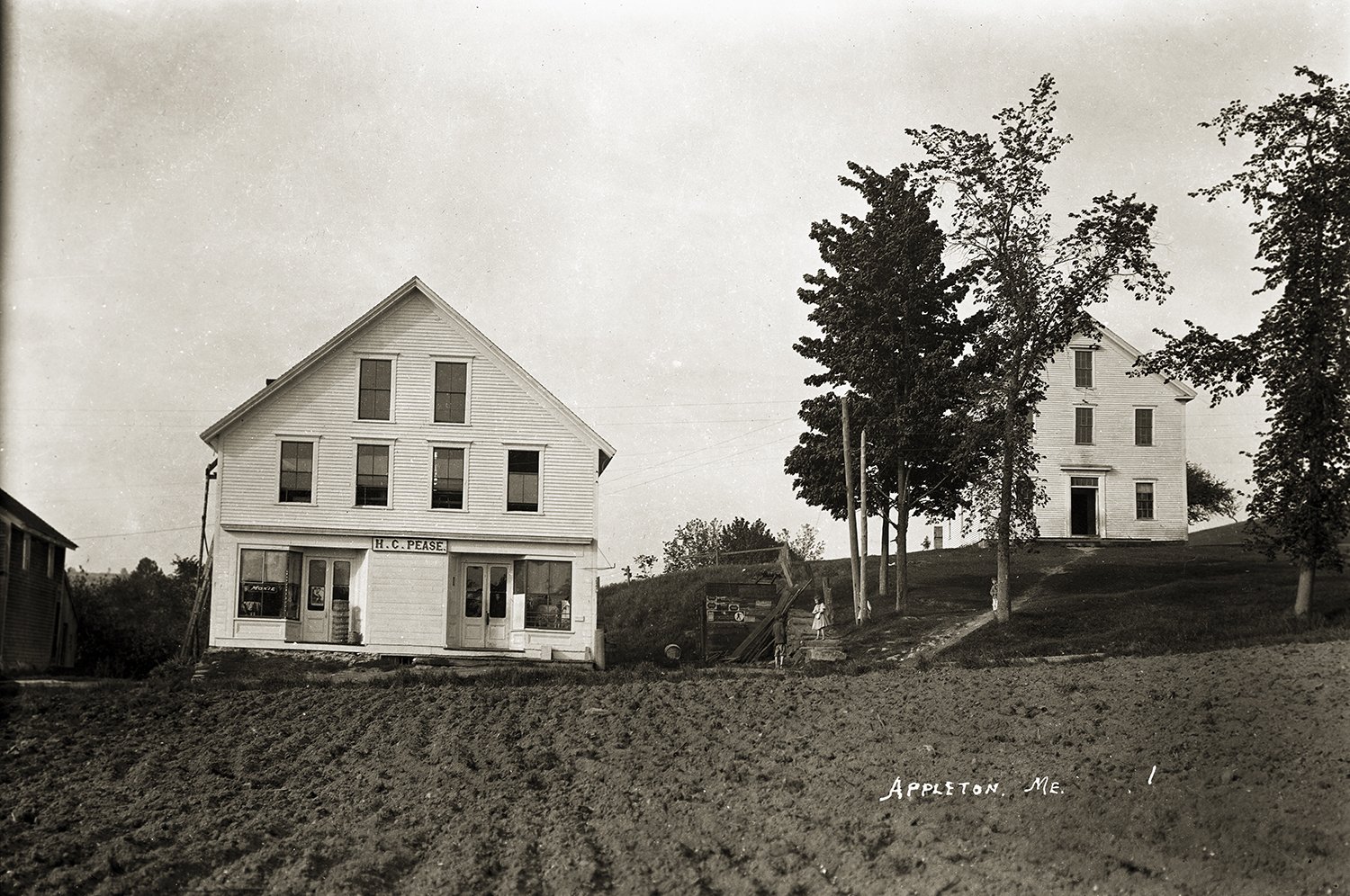
North Appleton General Store and Post Office. This building, still standing in North Appleton where Route 105 crosses the St. George’s River, was the general store and post office. At the time of the photo the store was owned by T. L. Waterman. Across the road from the store was a cheese factory that had a hall upstairs used for dances, roller skating, and community gatherings. The building was owned and last operated by Grace and Leland Johnson.
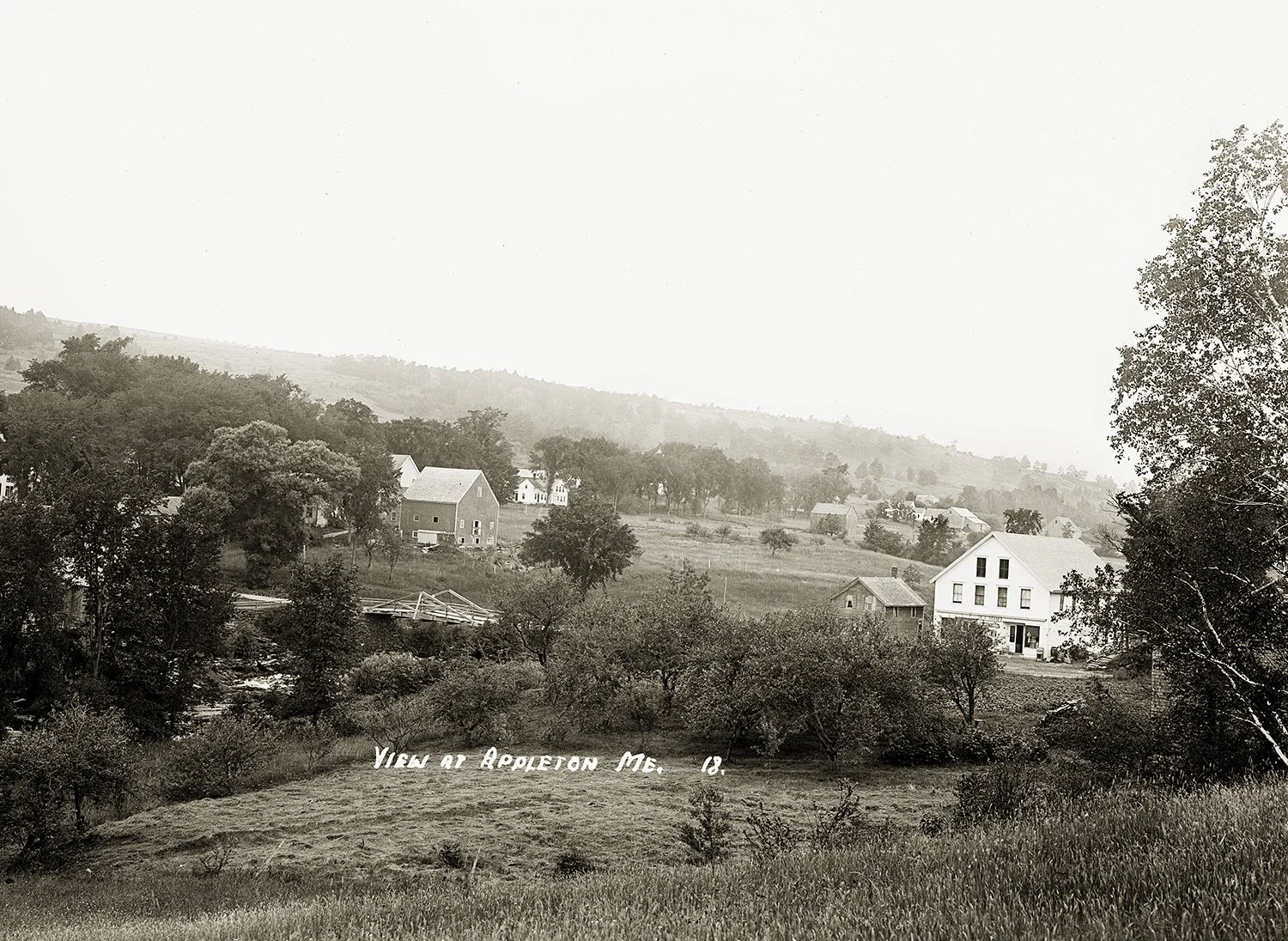
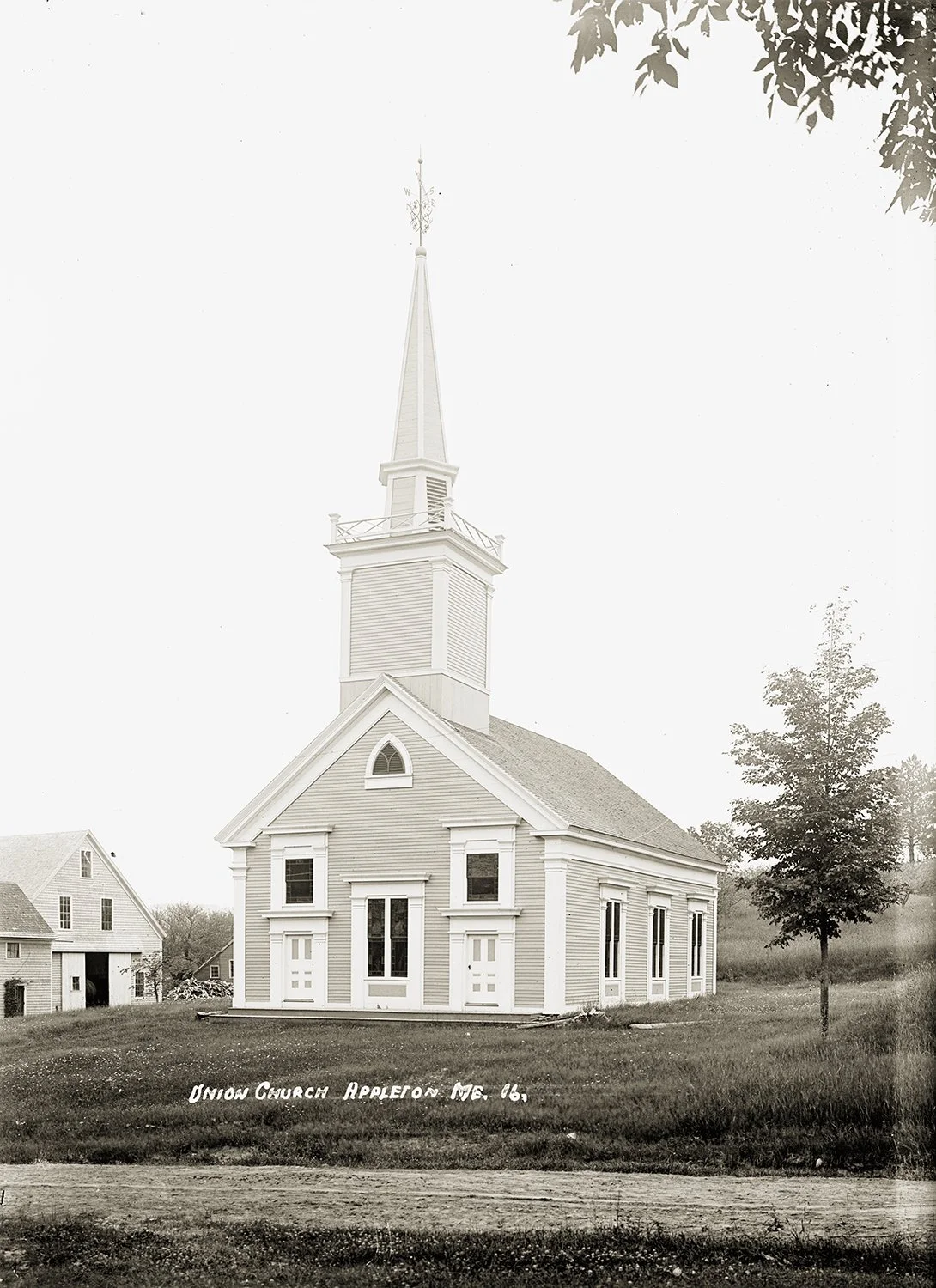
McLain’s Mills (Appleton Village), Me This photo shows McClain’s Mills, now Appleton Village, looking east from the head of Sennebec Road and Elm Street and Town Hall Road. At the left, in the trees, is visible the porch of the Sumner/Gushee house, which is no longer there. Beyond is the Grange, once Keene’s store, which was later the library and is now vacant. Across the river on the same side of the road is a small shop, once the George Pease store, and, just beyond it, Riverside Hall, with the Harry Pease store below and a community hall above. This building was the home of the Appleton Community Club, and, until construction of the new Village School, provided the lunchroom and gymnasium for the school. Older residents will remember the “home court advantage” provided by the low beams crossing the basketball court. The hall provided space for theatre, dancing, and large community gatherings as well. At the left foreground is Brown and Sprowl’s store and its barn, then the V. O. Keller Blacksmith Shop. Just before the bridge is Canal Street/ “Cat Alley”, along which were Horace Titus’ grist mill, a turning shop, the Titus rake and casket factory, and other small shops. A farm was the end of the road. The lumber yard of McLain’s Mill is just visible at the far side of the bridge. The dam which powered this set of mills was just to the right of the bridge, with a sluiceway down each side of the river carrying water to the mill wheels. Above the roof of Riverside Hall at the left may be seen the old Village School, where the Town Hall now sits. Above the V.O. Keller shop at the right may be seen the Keller residence and the still-standing Union Meeting House (not to be confused with North Appleton’s Union Church), restored and now owned by the Appleton Historical Society. Pine Grove Cemetery stretches across the crest of the hill above the village.
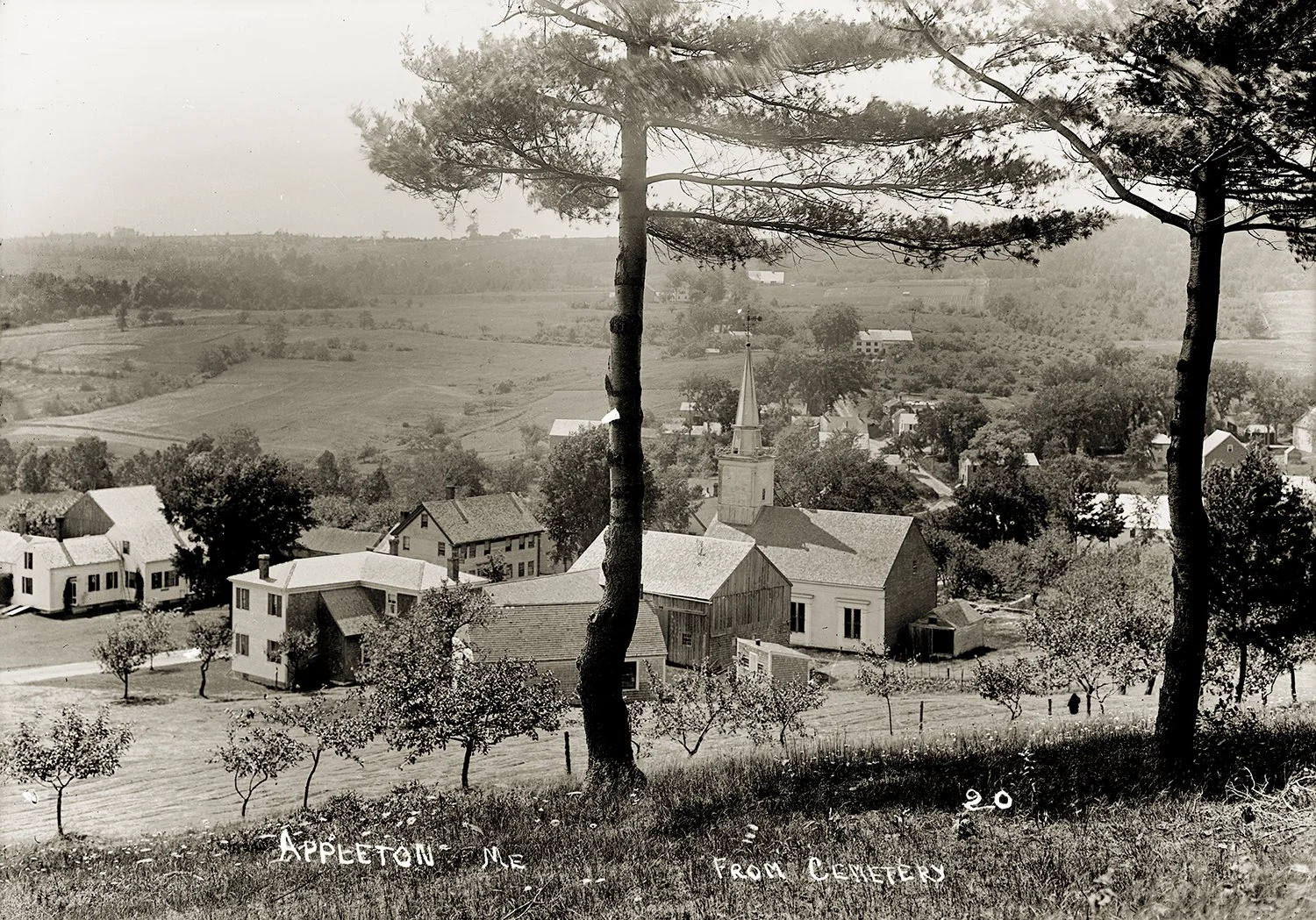
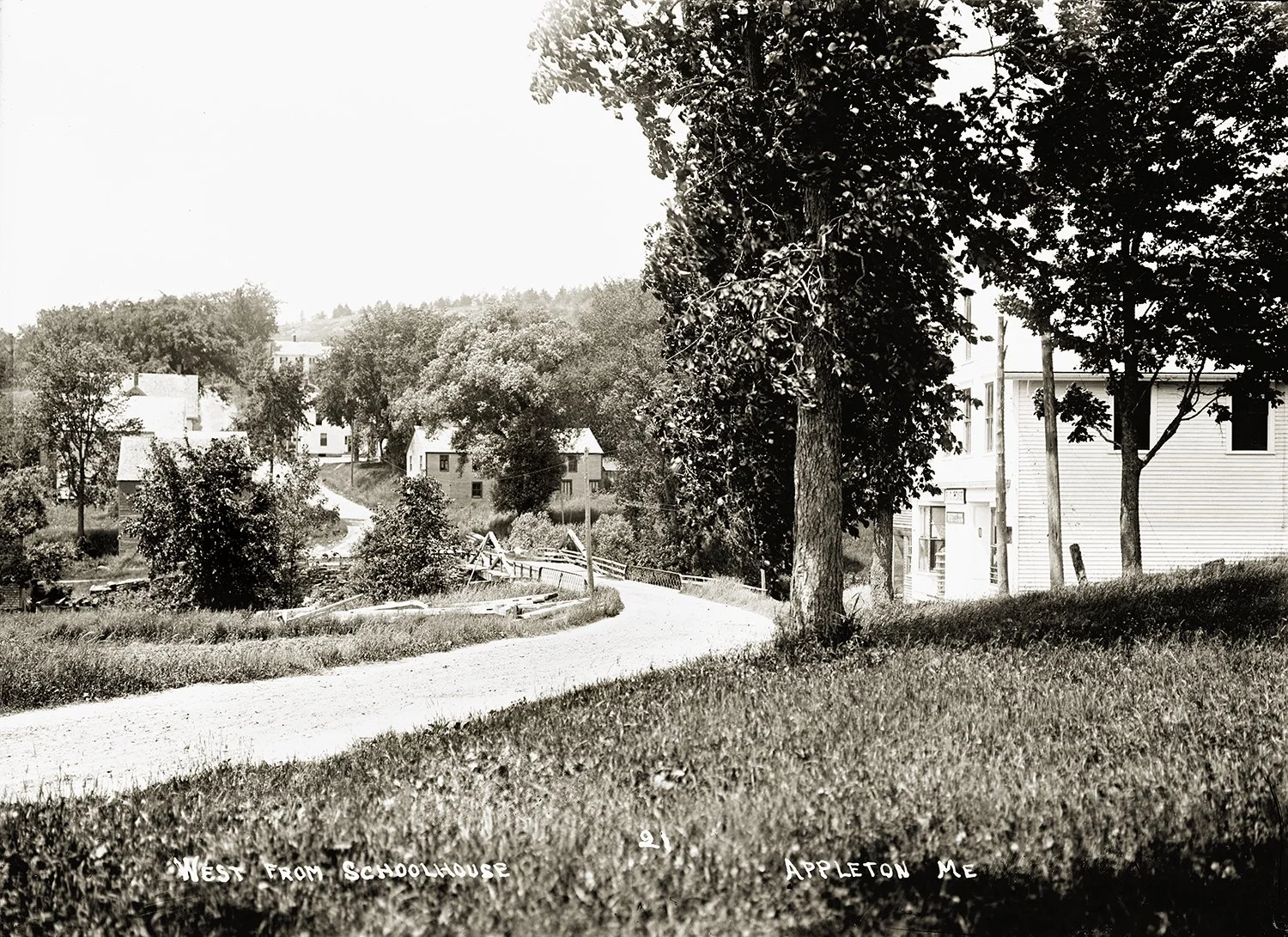


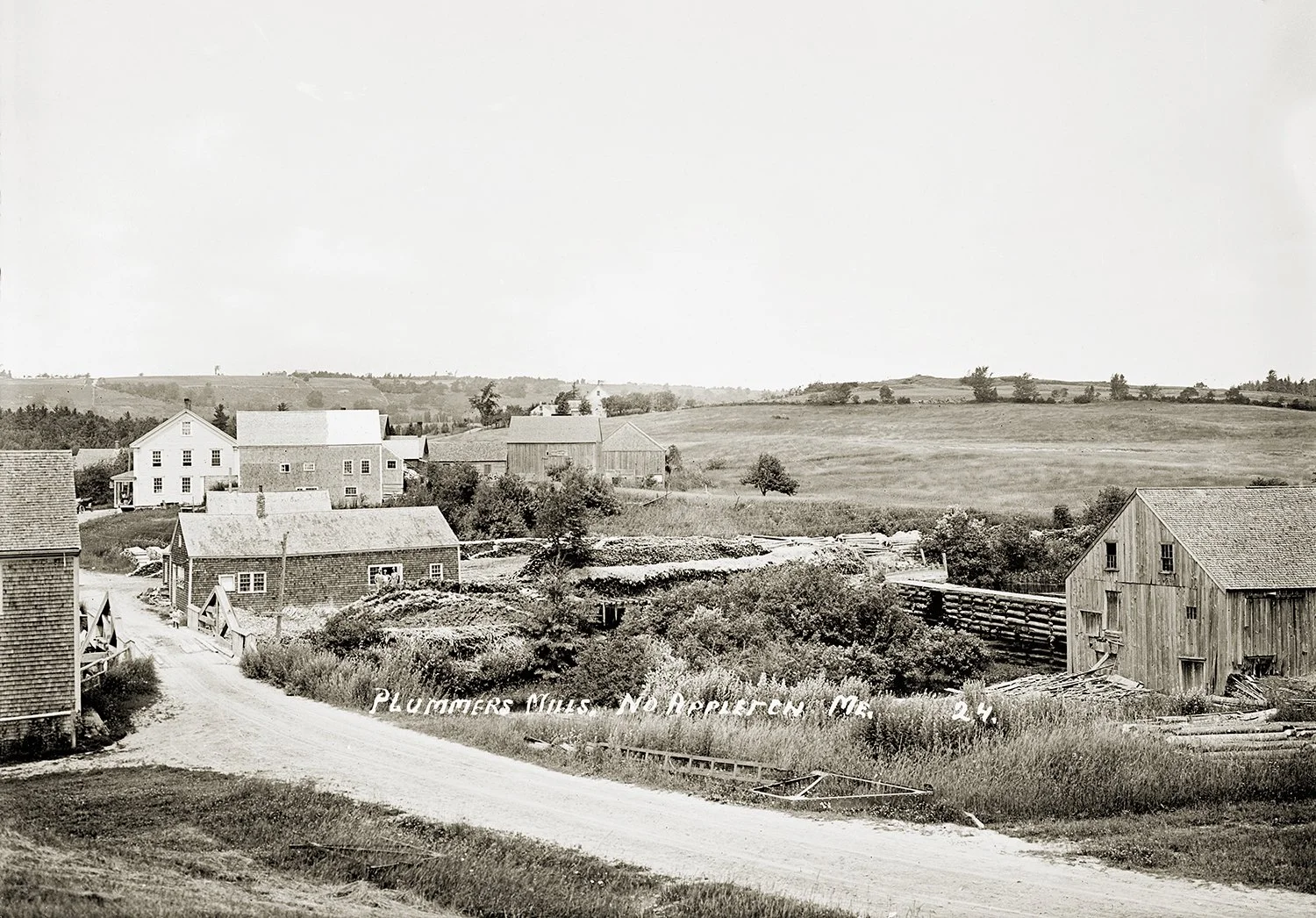
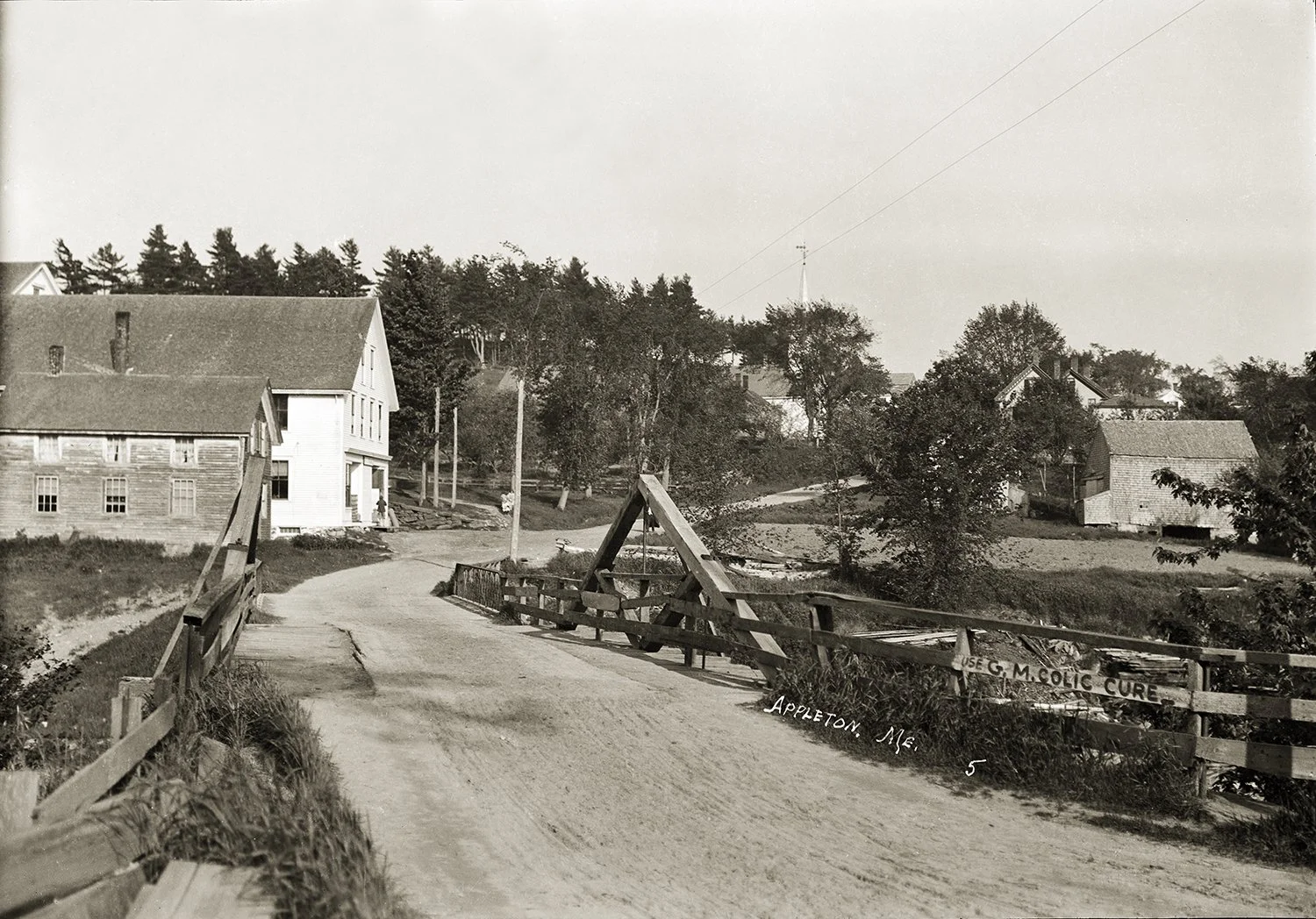
Plummers Mills, No. Appleton. Me This location was also known as Smith’s Mills and Meservey’s Mills, among other names, depending upon the owner at the time. In the right foreground is the long lumber mill, fed by a penstock from the dam visible at its left. At the other side of the dam, farther left, is the stave mill. The old St. George’s River Canal cut between the stave mill and the large white building, recognizable as the General Store and post office from the photo above. Its barns and outbuildings stretch from the store toward the right. Above those barns, just left of center, is “Sunnyside,” home of Bernard Pitman, Appleton’s onetime Poet Laureate. That house, still standing, is now the home of “Ted” Crosby Johnson and his wife, Anne. To the left of their house, in the trees, is the Union Church of North Appleton, no longer standing.

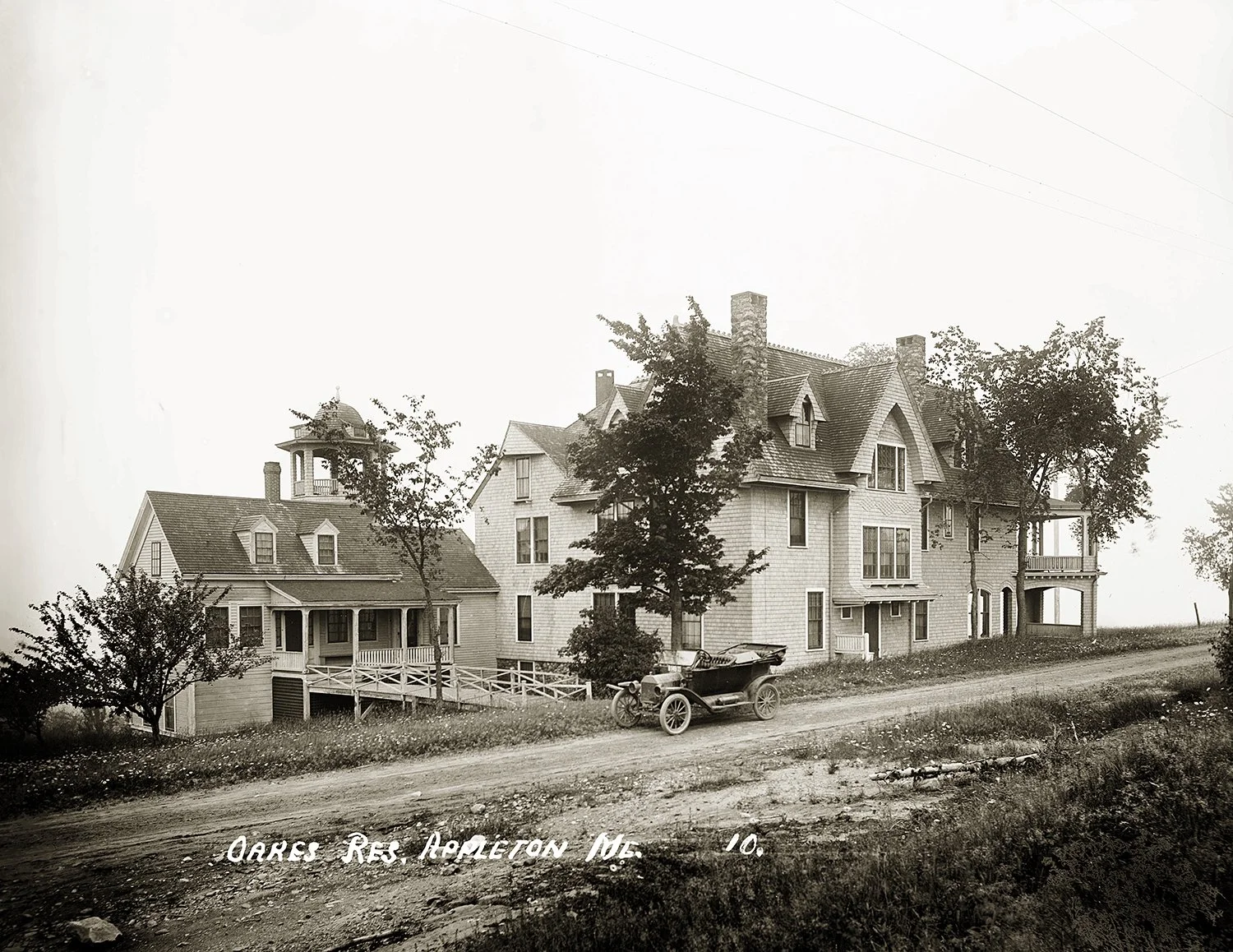
Oakes Res., Appleton, Me The Oakes Mansion on Appleton Ridge, high above the village of McClain’s Mills (today’s Appleton Village, was constructed in 1896 in the shingle style by Francis Oakes, a wealthy New York dye manufacturer, for his wife, as an addition to her parents’ home on the Ridge. She was Appleton native, actress, and singer Adelene Sullivan. The house’s extensive outbuildings are gone, but the main house still stands and is undergoing renovation. To the original Sullivan farmhouse at the left, Francis and Adelene added a three-story addition of some twenty rooms. The domed cupola visible above the original section at the left was an observation balcony above the water tower behind the house, which provided storage and pressure for the extensive indoor plumbing, which was unusual for that date and place. The structure is now the home of Donald Burke.

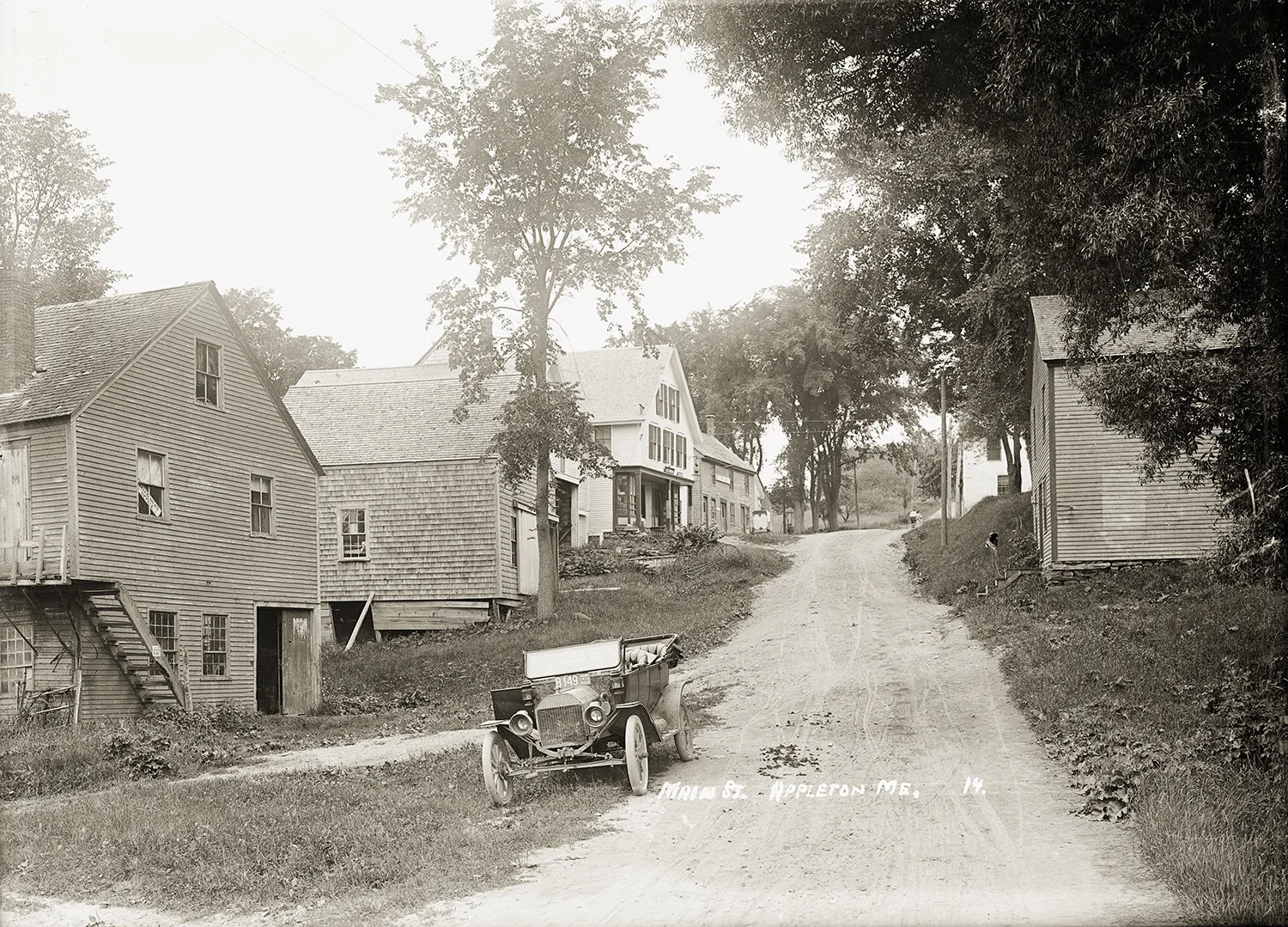
Elm St., Appleton, Me This is a view north along Elm Street, which is now the Searsmont Road portion of Route 131. In its day, the main street through Appleton Village was lined with the tall elms visible in this photograph and known then as Elm Street. The prominent building at the left was the L.W. Morang store at the time of the photograph and is one of the several places in the village where the post office was at one time located. It is still standing at the junction of Town Hill Road (then Town Hall Road) to the left, Elm Street at the right, and Sennebec Road in the right foreground. The double house-and-barn beyond is the former Currier home, still standing. The garage past that house was an automobile repair shop operated for many years by Maurice Collins.
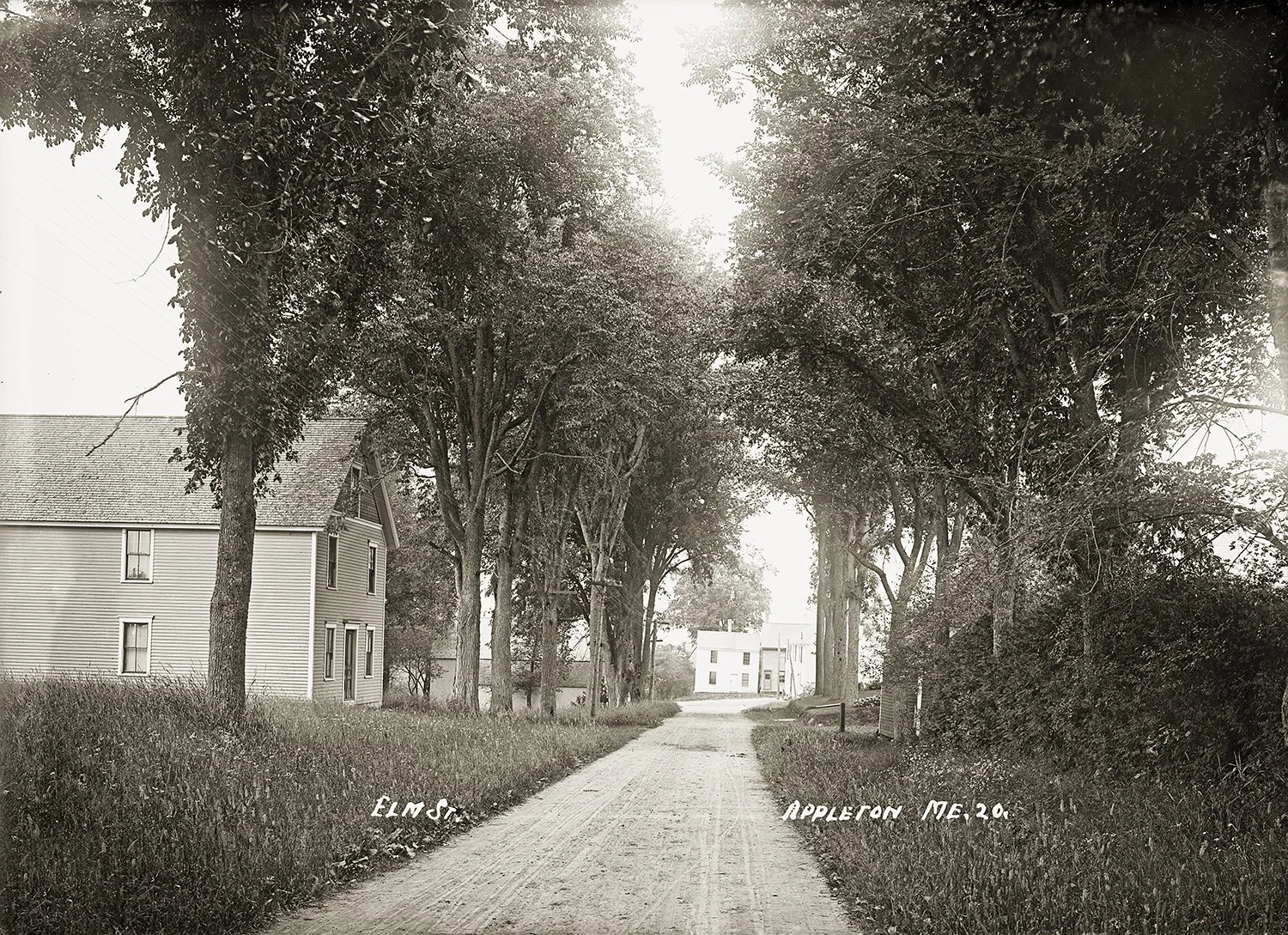
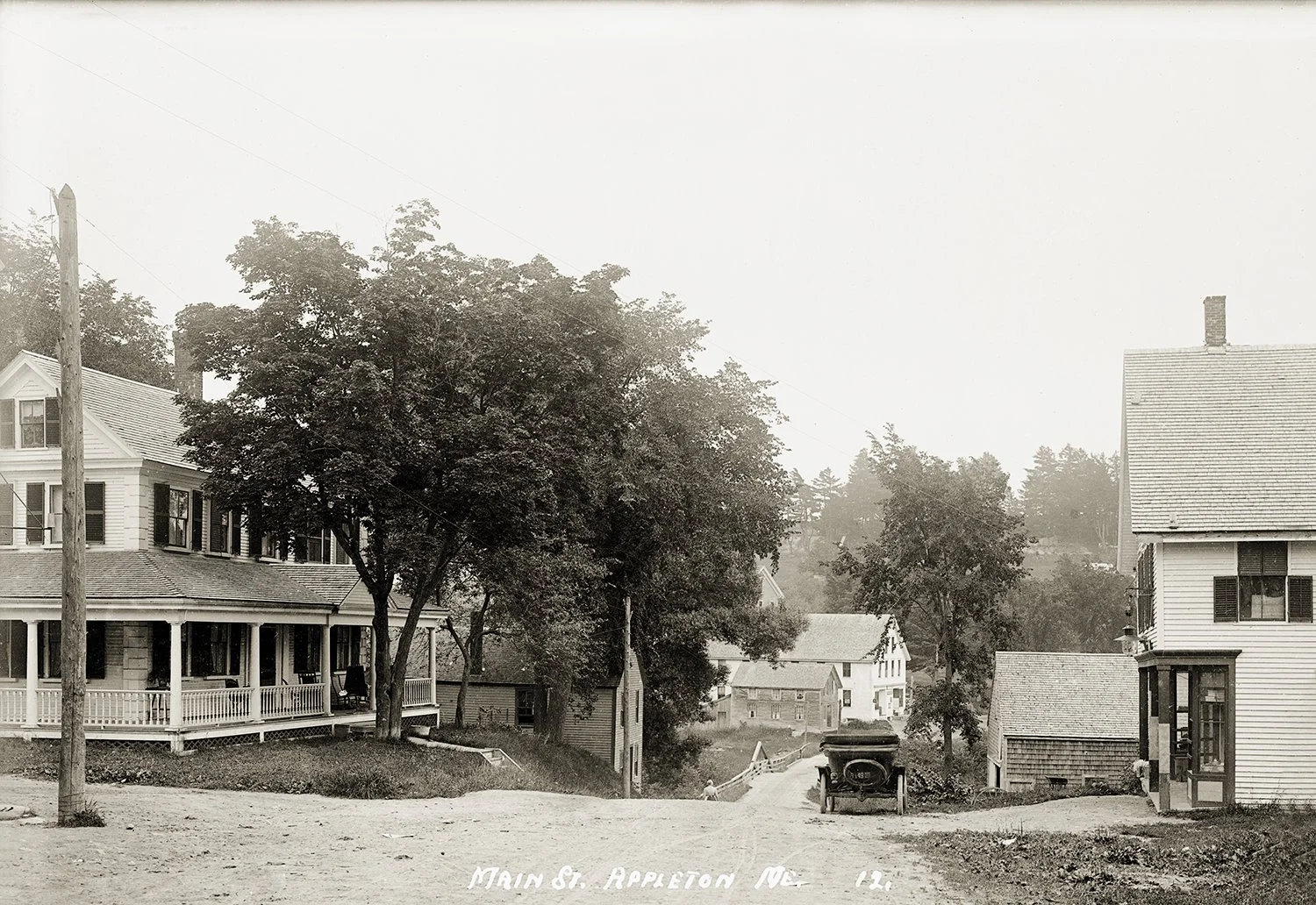
Elm St., Appleton, Me This is a view looking south on Elm Street into Appleton Village. On the left is the Odd Fellows Hall, now a private residence. The Sumner/Gushee barn and house are just beyond at the left, and the Brown and Sprowl store is barely visible beyond. The Manley law office is at the centre at the end of the road. To its right (not visible) was GAR Hall, later moved onto the Brown and Sprowl store as its grain shed and now torn down. Elm Street ended at the Manley office and GAR Hall but was extended to join the Union Road during WPA period in the 1930s. The Morang store visible in the previous photo is behind the trees, and the Collins Garage is barely visible through the trees by the short black post at the right side of the road.
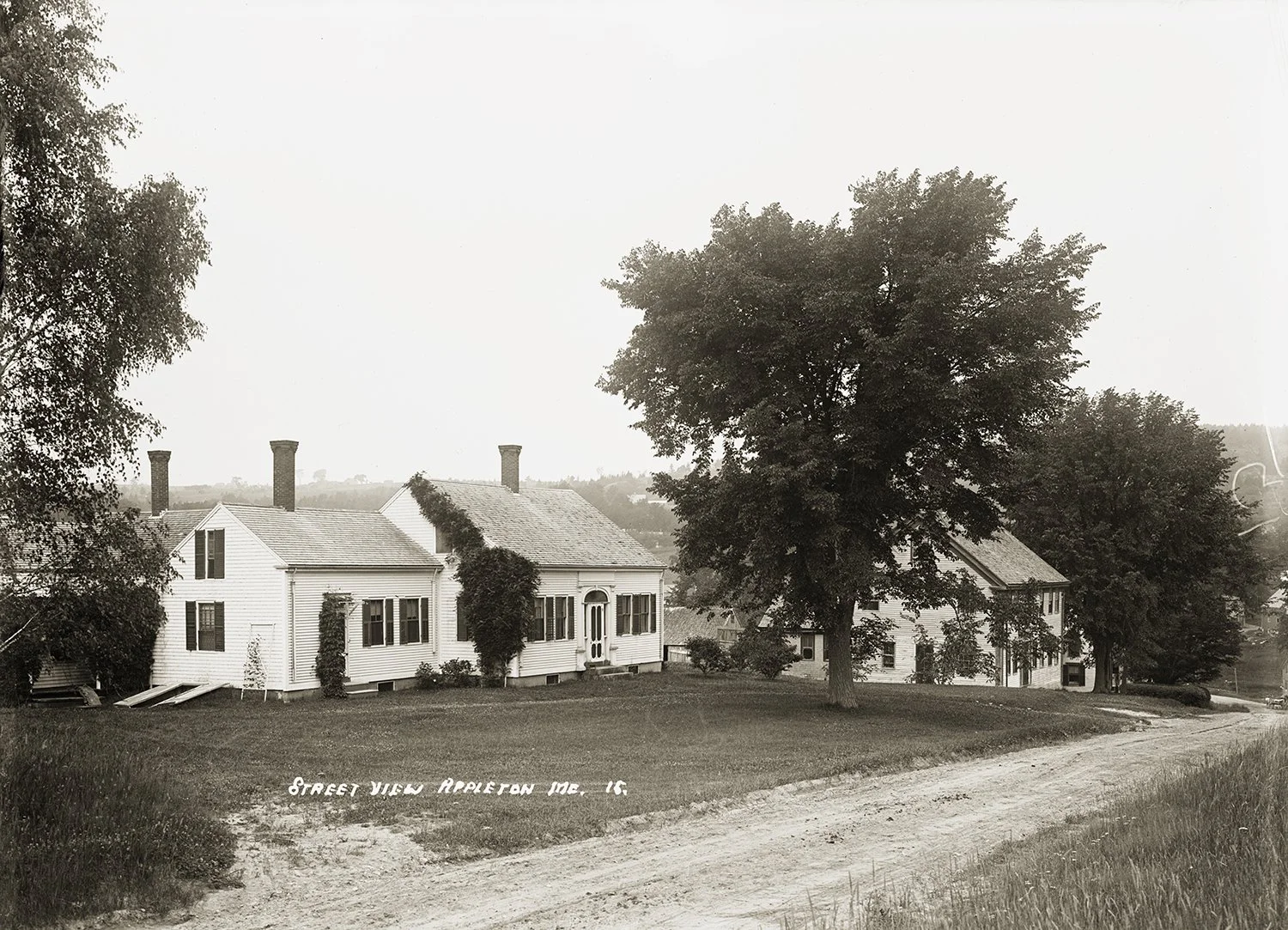

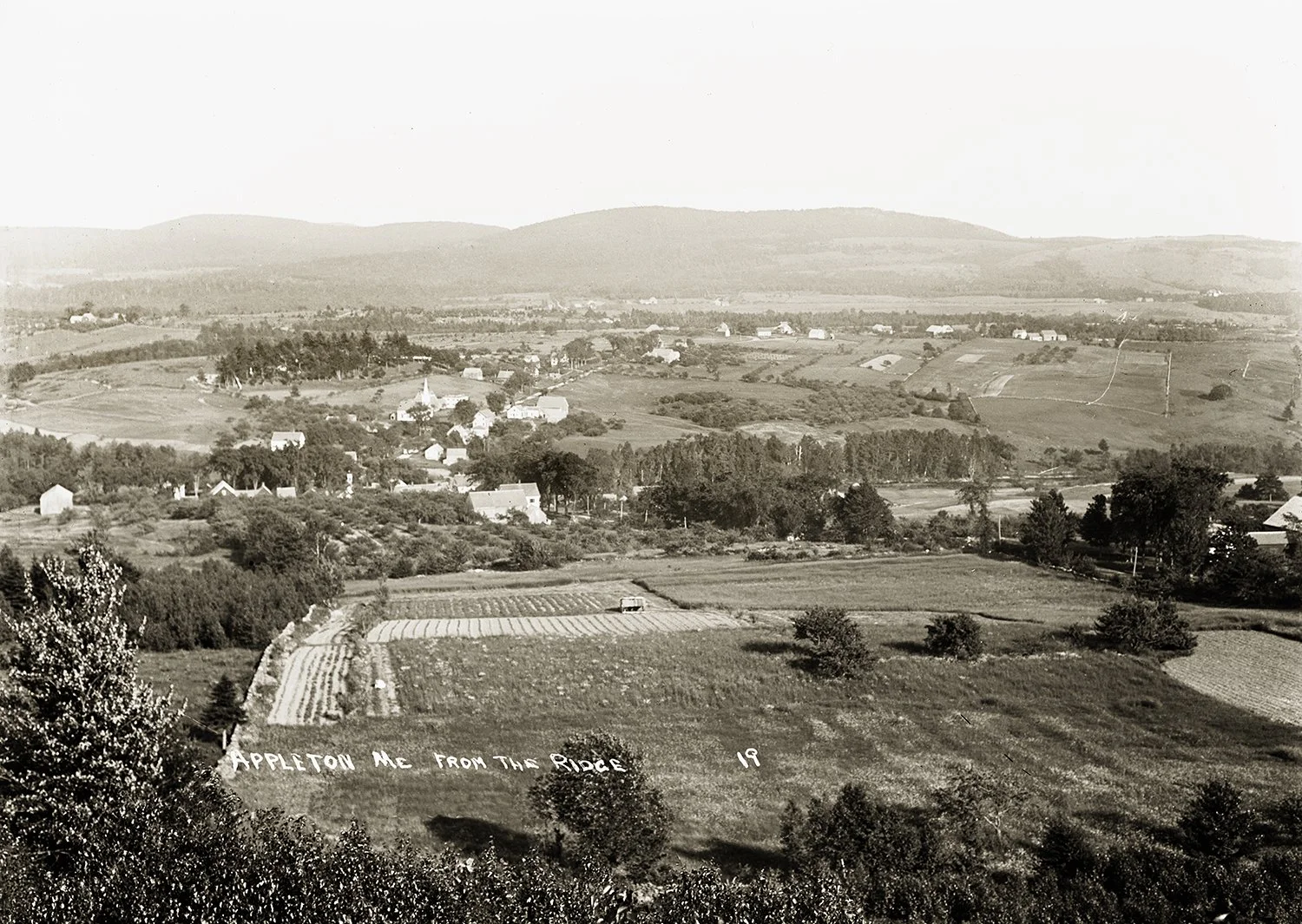
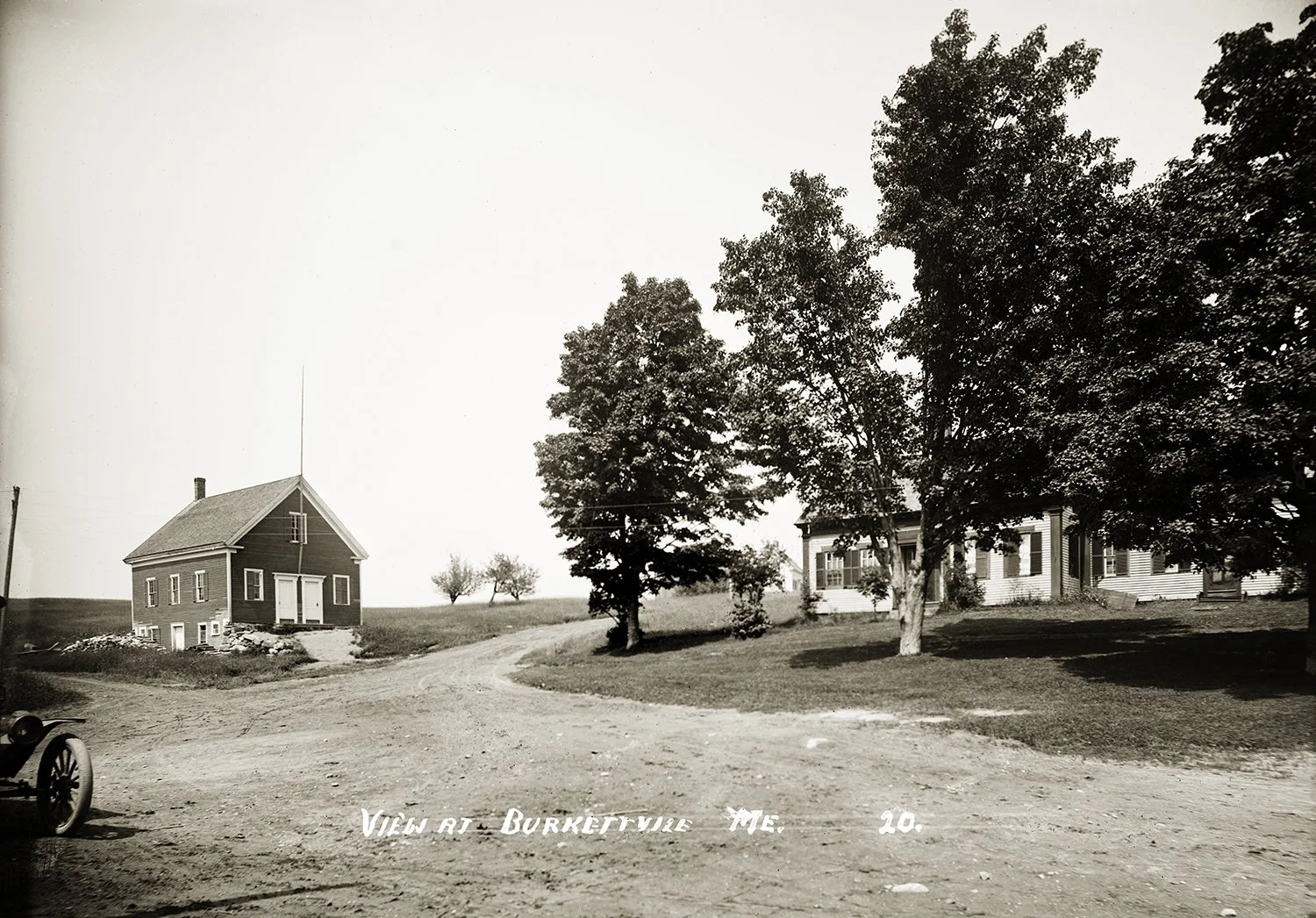

Post Office, Burkettville, Me At the heart of the original town of Appleton, at the junction of the Burkettville Road (now Route 105) and Collinstown Road, was the once-busy village of Burkettville. It was named for early settler Andrew Burkett, founder of the store and proprietor of the principal sawmill. The Miller family acquired the store in the 1800s and ran it until its last proprietor, George A. Miller, retired in 1895. Dr. Royce Miller noted in his History of Burkettville that at its closing all outstanding debts, including some over a hundred years old, were cancelled. The Millers had quietly carried some people through hard times. One of Appleton’s five post offices in the early and mid-1900s (North Appleton, McLain’s Mills, Elmwood. West Appleton, and Burkettville) was located in this store. The store’s several barns and sheds, extending to the left of the large white store building, housed grain, flour, kerosene, molasses, and other bulk items. The large Miller house still stands across from the site of the store, which was demolished in 2010 after standing vacant for many years. Burkettville was the principal settlement in the original town of Appleton, before one third of the original town of Hope, including Smith’s and McLaine’s Mills, was added to Appleton in 1843. Thus some local folks refer to Burkettville as “the Capital of Appleton.” Though the once vital Miller store is now gone, the village around it is still active, and its Madomac Valley Grange still thrives.